


Joe McKinnon – It’s Time to Reprioritize Fundamental Research
 This week, we present the three top finishers in the C.D. Howe Institute Intelligence Memo competition, which was open to graduate students across the country. Today, our first co-winner. To: Canadian innovation policy leaders From: Joe McKinnon Date: October 23, 2023 Re: It’s Time to Reprioritize Fundamental Research Significant investments in fundamental research are needed […]
 Rosalie Wyonch – Smooth Transitions: Boosting International Student Work Success
 To: Labour market observers From: Rosalie Wyonch Date: July 26, 2023 Re: Smooth Transitions: Boosting International Student Work Success There are more international students in Canada than ever. Many experience challenges along the path of getting their education, applying for jobs and securing permanent residency status in Canada. Policymakers and educational institutions can take steps to improve the […]
 Where Women Are Working
 Greater labour force participation and better employment outcomes among women can help address some of the challenges posed by an aging population and have a positive impact on economic growth, productivity, gender equality and poverty reduction. Canada could add $150 billion to its annual GDP by boosting women’s overall workforce participation ($63.3 billion), encouraging their […]
 Mahboubi, Zhang – Exploring the Female Employment Gap
 To: Canadians concerned about labour shortages From: Parisa Mahboubi and Tingting Zhang Date: July 5, 2023 Re: Exploring the Female Employment Gap The COVID-19 pandemic has had a profound impact on the working lives of Canadians, with women affected differently than men. Our recent C.D. Howe Institute E-Brief examines how women fared before the pandemic, how the pandemic […]
 Tingting Zhang – Where are the Early Childhood Educators?
 To: Childcare policymakers From: Tingting Zhang Date: June 20, 2023 Re: Where are the Early Childhood Educators? The nationwide shortage of early childhood educators (ECEs) is the biggest obstacle to the rollout of Canada’s new national childcare plan. ECEs provide a critical service to support mothers who re-enter the labour force. Sufficient ECE numbers contribute to both the accessibility […]
 Does Mandatory Work Integrated Learning Really Benefit?
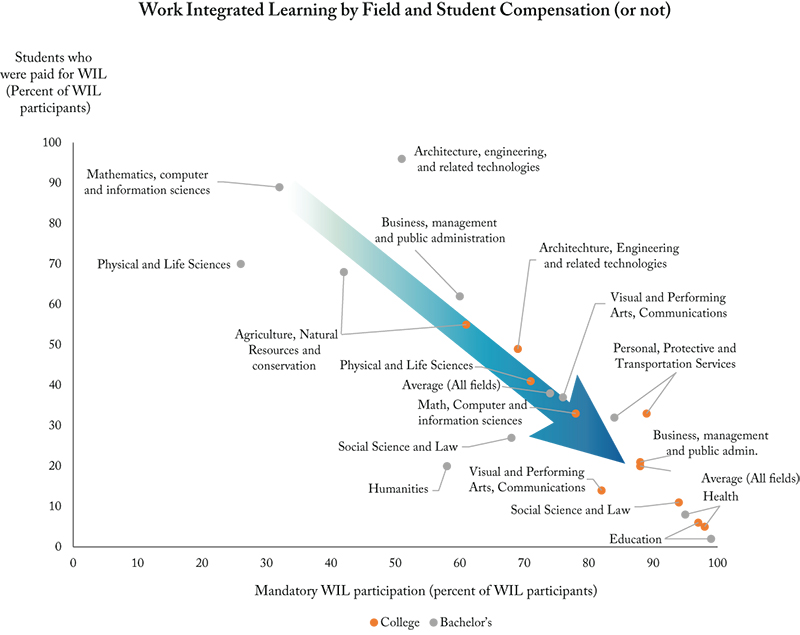 Research shows that there are many beneficial labour market outcomes associated with participating in work-integrated learning (WIL) during postsecondary studies. The majority of students who participate in WIL report that it was helpful to them in finding a job after graduation. However, many students also report that they were not paid for their labour during […]
 Juggling Act: Women, Work and Closing the Gaps with Men
 The COVID-19 pandemic has had a profound impact on the working lives of Canadians, with women affected differently than men. Indicators of labour force participation and employment are crucial in assessing women’s position in the labour market. This E-Brief explores how women have fared in these areas before the pandemic, how the pandemic has impacted […]
 Parisa Mahboubi on BNN – Women still face gaps with men in the labour market: Study
 Parisa Mahboubi, senior policy analyst at C.D. Howe Institute, joins BNN Bloomberg to discuss the ways in which women’s participation in the labour force, their work lives and work performance have been impacted by the pandemic.
 From Class to Career: How Work Integrated Learning Benefits Graduates Looking for Jobs
 • Work integrated learning (WIL) is associated with easing graduates’ transition into the labour market, as measured by employment outcomes such as income, employment status, or whether the occupation matches the student’s field of study. This report analyses newly available data to provide insights into the success of different types of WIL (e.g., co-op programs […]
 Åke Blomqvist – Binding Arbitration Should be Front and Centre in Public Sector Contract Talks
 From: Åke Blomqvist To: Canada’s labour ministers Date: May 26, 2023 Re: Binding Arbitration Should be Front and Centre in Public Sector Contract Talks High and unpredictable inflation has made labour negotiations more difficult. The recent strike by more than 150,000 federal public servants is but one illustration. Lasting 12 days for most affected workers and two weeks for 35,000 Canada Revenue […]
 Canada’s Labour Shortage with Mikal Skuterud
 As we come out on the other side of COVID-19, Canada’s labour shortage is quickly improving. However, as C.D. Howe Institute Fellow-In-Residence and University of Waterloo Economics Professor Mikal Skuterud tells us on episode seven, the fuel for the economic recovery requires targeted immigration.
 Feeble Business Investment Shows Morneau is Right About Economic Stagnation – Financial Post Op-Ed
A core message in former federal finance minister Bill Morneau’s 2022 book, Where To from Here?, is that Canada needs faster economic growth, which requires higher business investment. If Canadian living standards fail to keep pace with those abroad, ever fewer talented people will choose Canada as a place to live and work. The latest numbers make heeding his warning even more urgent.
In his book, Morneau cites figures from the C.D. Howe Institute showing that business investment per available worker — spending on new capital divided by the labour force — has been lower in Canada than in other OECD countries, especially the United States. He laments that raising investment to spur faster growth is not a priority for the…