


Has Canada reached a breaking point or turning point? – Hill Times Op-Ed
Even if it’s a good punchline for late-night comedians, there is nothing inconsistent about building pipelines while reducing greenhouse gas emissions. Stranding Canadian oil by blocking pipelines is damaging to both the energy industry and the Canadian economy as a whole. Moreover, it is an ineffective way to reduce our carbon emissions—a price on carbon is the most economically efficient policy tool we have.
By internalizing greenhouse gas externalities in economy-wide decisions, carbon pricing ensures that everyone considers their incremental impact on the global climate. It allocates emission reductions to the activities with the so-called lowest cost of abatement. If oil can be economically produced while facing a carbon…
Sylvain Charlebois – Ministerial Mandate Letter: Minister Of Agriculture And Food
 As Canada forms its next government, the Prime Minister’s Office will be preparing ministerial mandate letters. In this special Intelligence Memo series, policy experts highlight key challenges and priorities in each minister’s portfolio. From: Sylvain Charlebois To: The incoming Minister of Agriculture and Food Date: November 13, 2019 As you embark on your term as […]
Grant Bishop – Ministerial Mandate Letter: Minister of Environment and Climate Change
 As Canada forms its next government, the Prime Minister’s Office will be preparing ministerial mandate letters. In this special Intelligence Memo series, policy experts highlight key challenges and priorities in each minister’s portfolio. From: Grant Bishop To: The incoming Minister of Environment and Climate Change Date: October 24, 2019 Canada and its partners are at a critical […]
Grant Bishop – Ministerial Mandate Letter: Minister Of Natural Resources
 As Canada forms its next government, the Prime Minister’s Office will be preparing ministerial mandate letters. In this special Intelligence Memo series, policy experts highlight key challenges and priorities in each minister’s portfolio. To: The incoming Minister of Natural Resources From: Grant Bishop Date: October 23, 2019 Canada’s natural resources are the bedrock of national wealth and prosperity. […]
Blake Shaffer – Using Forward Contracts To Deliver Reliable And Affordable Power
 From: Blake Shaffer To: Alberta and Ontario energy regulators Date: October 18, 2019 Subject: Using forward contracts to deliver reliable and affordable power Alberta recently cancelled the previous government’s plan for a “capacity market” for electricity that would have paid generators both for the energy they produce and their capability to do so (“steel in the ground”). Ontario has […]
Regulating Methane Emissions Will Keep Canada’s Oil And Gas Sector Competitive, Not Hurt It – Globe And Mail Op-ed
Canadian governments are making good on a 2016 pledge to cut oil-and-gas-sector methane emissions by 40 to 45 per cent below 2012 levels by 2025.
Since the pledge, both Alberta and the federal government have issued rules on reducing leaks of methane, which is many times as potent a heat trapper as carbon dioxide, and both are slated to go into effect next year.
In recent weeks, however, the U.S. Environmental Protection Agency has proposed relaxing regulation of oil-and-gas-sector methane emissions, sparking debate about whether new tougher emissions rules will make Canada uncompetitive in attracting oil and gas investment.
Nevertheless, for our energy to retain market share globally, Canadian production…
Brian Livingston – Contracting Enbridge Mainline Could Reshape Alberta’s Oil Production
 To: Louise George, Secretary to the Canada Energy Regulator cc: Sonya Savage, Alberta Minister of Energy From: Brian Livingston Date: September 24, 2019 Re: Contracting Enbridge Mainline could reshape Alberta’s oil production The issues of curtailment, pipeline proposals and pipeline apportionment are related flashpoints in the oil patch. Curtailment has resulted in higher prices for heavy oil, but […]
Governments and the energy industry should prepare for oil demand to plateau – Globe and Mail Op-Ed
Remember when some concerned energy analysts predicted there was an imminent limit to global oil supply? It’s now obvious there was no “peak oil” on the supply side; the world has hundreds of years of available oil supply. However, a peak in global oil demand is within sight and could be reached by the mid-2030s, if not sooner.
The supply-side analysis of peak oil was wrong-headed for two key reasons. First, it did not reflect the massive stocks of non-conventional oil, such as that embedded in porous rock and in Canada’s oil sands. Second, and more importantly, supply-side analysis severely underestimated the capacity of the oil industry to innovate and find ways to access these non-conventional sources of oil by developing new…
Grant Bishop – Alberta’s New Big-emitter Plan Tilts Towards Higher Intensity
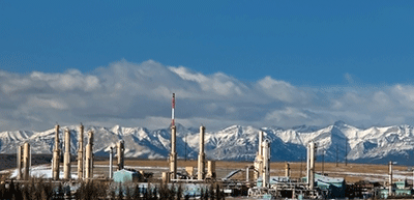 To: Jason Nixon, Minister of Alberta Environment and Parks From: Grant Bishop Date: August 9, 2019 Re: Alberta’s New Big-Emitter Plan Tilts Towards Higher Intensity Last month, Alberta’s government released its proposal for a new framework for output-based pricing of greenhouse gas emissions from large industrial emitters. The Technology Innovation and Emission Reduction (TIER) would replace the current […]
Opinion: Alberta’s Carbon Pricing Redesign Risks Diminishing Comparative Advantage For Lower Emission Facilities – Calgary Herald Op-ed
Earlier in July, Alberta’s government released its proposal for a new framework for output-based pricing of greenhouse gas emissions from large industrial emitters. The Technology Innovation and Emission Reduction (TIER) would replace the current Carbon Competitiveness Incentive Regulation (CCIR), introduced by the previous government in 2018.
The central difference is a move from a “one product, one benchmark” approach under CCIR for setting the thresholds above which facilities would face a carbon price and below which facilities would earn credits. In contrast with CCIR, for all sectors outside power generation, the TIER will move to a facility-specific benchmark equal to 90 per cent of a facility’s average emission intensity…
Glen Hodgson – Climate Change Demands Better Risk Management
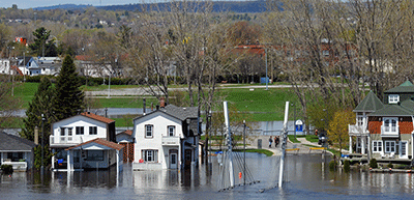 From: Glen Hodgson To: Canada’s risk managers Date: August 2, 2019 Re: Climate Change Demands Better Risk Management A few weeks ago, the Bank of Canada added climate change to the list of risks it intends to analyze as part of its oversight responsibilities for the stability of the Canadian financial system and the overall performance of […]
Too TIER-ed? Alberta’s Proposed Re-design of Carbon Pricing for Large Emitters
 Alberta’s government proposes to replace the current Carbon Competitiveness Incentive Regulation for output-based carbon pricing of large emitters with the Technology Innovation and Emissions Reduction (TIER) system. A submission on behalf of the C.D. Howe Institute to Alberta’s government (published as a C.D. Howe Institute Verbatim here) details concerns with TIER – specifically that imposing a facility-specific benchmark on all facilities […]