


Ian Parry – Canada’s Carbon Price Floor: A Model For The World?
 From: Ian Parry To: Governments Signatory to the Paris Accord on Climate Change Date: July 26, 2018 Re: Canada’s Carbon Price Floor: A Model for the World? In October 2016, Prime Minister Justin Trudeau announced a pan-Canadian approach to carbon pricing ensuring that carbon pricing applies across provinces and territories in Canada with increasing stringency over […]
Benjamin Dachis – Ottawa’s Clean Fuel Standards Still Too Murky
 To: Governments across Canada From: Benjamin Dachis Date: July 23, 2018 Re: Ottawa’s Clean Fuel Standards Still Too Murky Ottawa should clear up confusion about its plans for clean fuel standards. Policymakers must examine the inherent limitations and potential economic costs of a clean fuel standard system. Clean fuel standards (CFS) are an evolution of […]
Speed Bump Ahead: Ottawa Should Drive Slowly on Clean Fuel Standards
 Ottawa should clear up confusion about its plans for clean fuel standards, according to a new report by the C.D. Howe Institute. In “Speed Bump Ahead: Ottawa Should Drive Slowly on Clean Fuel Standards” author Benjamin Dachis argues federal policymakers must examine the inherent limitations and potential economic costs of a clean fuel standard system.
Bushnell, Hughes, Smith – Food vs. Fuel? Impacts of Petroleum Shipments on Agricultural Prices
 From: James Bushnell, Jonathan Hughes and Aaron Smith To: Regulators and users of the Western Canadian rail network Date: July 3, 2018 Re: Food vs. Fuel? Impacts of Petroleum Shipments on Agricultural Prices The shale revolution generated tremendous changes in both the volume and geographical distribution of oil production. The rapid increase of gas and oil […]
Schwanen, Dachis – Federal carbon pricing backstop can reduce the litigation costs of cap-and-trade phaseout
 From: Daniel Schwanen and Benjamin Dachis To: The Hon. Catherine McKenna, Minister of Environment and Climate Change Canada CC: Ontario Premier-designate Doug Ford Date: June 28, 2018 Subject: Federal carbon pricing backstop can reduce the litigation costs of cap-and-trade phaseout On June 15, Ontario’s Premier-designate Doug Ford announced that his government’s first act upon taking […]
Tracy Snoddon – How the Federal Government Should Prepare its Carbon Tax
 From: Tracy Snoddon To: Catherine McKenna, Minister of Environment and Climate Change Date: June 25, 2018 Re: How the Federal Government Should Prepare its Carbon Tax The election of Doug Ford and his Ontario Conservatives brings, among other matters, renewed focus on the federal government’s looming requirement that all provinces impose some version of a […]
Benjamin Dachis – Seven Ways to Really Reduce the Cost of Electricity
 From: Benjamin Dachis To: Ontario electricity consumers Re: Seven ways to really reduce the cost of electricity Date: June 4, 2018 There’s been lots of talk about cutting electricity costs for Ontario consumers this election, without a lot of specific ideas. Here are seven tangible ways that a new or re-elected government can cut the […]
Move over, Waterloo and Ottawa: Calgary is now out-innovating you – CBC’s The Road Ahead
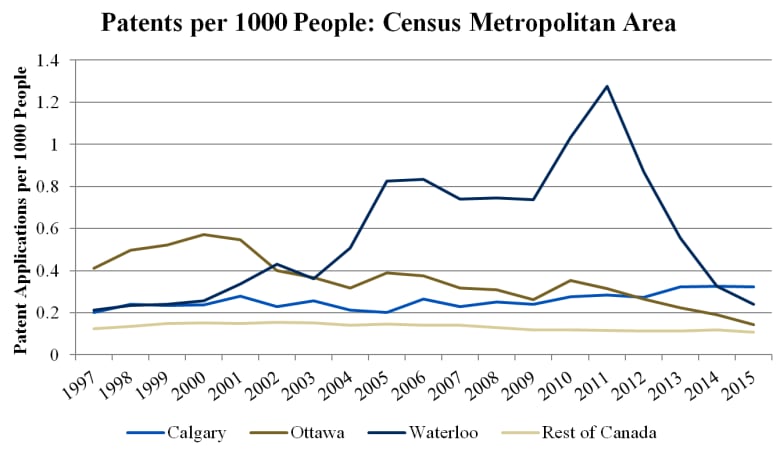
Which is the most innovative city in Canada?
You might be surprised to know that Calgary has now taken the lead on that front, as measured by one of the most common ways of gauging innovation — patents.
Calgary has now surpassed the likes of Ottawa and Waterloo in terms of patents per capita. And yet, the Alberta city’s rise has happened without the fanfare that accompanied the ascent of the country’s previous tech hubs in Ontario.
This is the untold story of how Calgary quietly rose to become Canada’s innovation leader. It’s a story that doesn’t have a central character. Unlike the tech booms of the past, there’s no Blackberry or Nortel dominating the scene. Rather, it’s a multitude of players in the oil and…
Hilber, Palmer, Pinchbeck – Does Historic Designation Induce Higher Energy Costs?
 From: Christian Hilber, Charles Palmer and Ted Pinchbeck To: Heritage preservation policymakers Date: May 23, 2018 Re: Does Historic Designation Induce Higher Energy Costs? Policies to preserve buildings, including privately-owned homes, for historical, cultural or architectural reasons are widespread across Europe and North America. In Canada, a designation under the Ontario Heritage Act, for instance, […]
Benjamin Dachis – Backstopping Kinder Morgan Makes Sense
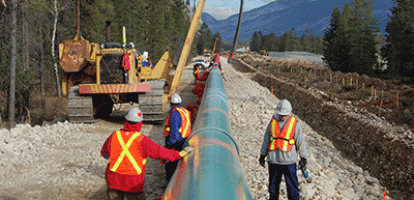 To: The Hon. Bill Morneau, Minister of Finance From: Benjamin Dachis Date: May 17, 2018 Re: Backstopping Kinder Morgan Makes Sense The federal government is wise to indemnify Kinder Morgan from any losses it may suffer in its Trans Mountain pipeline expansion project due to political obstruction in British Columbia —as announced yesterday. The Trans Mountain saga is well […]
Trans Mountain Pipeline Should Be Project No. 1 for the Canada Infrastructure Bank: Globe and Mail Op-Ed
We all know the Trans Mountain saga by now. Kinder Morgan wants certainty by May 31 on being able to proceed with its proposed pipeline expansion from Alberta to the B.C. coast. If not, it threatens to walk away, stranding Alberta’s oil. The federal government has committed to making the project happen, and has just the shiny new tool to help: the Canada Infrastructure Bank.
Ottawa, which approved construction, said it will use “all tools” available to get the pipeline built. The Alberta government has even mused about buying the project from Kinder Morgan. Both governments want to see it completed, for good reason. A new pipeline to tidewater will increase the price Canadian oil fetches because of the Alberta supply…
Andrew Roman – Are Old Polluters Better Than New Polluters?
 From: Andrew Roman To: Concerned Canadians Date: April 30, 2018 Re: Are Old Polluters Better Than New Polluters? One of the environmental arguments against the Trans Mountain pipeline expansion is that it will induce an increase in carbon dioxide (CO2) emissions from the Alberta oilsands. This increase would prevent Canada from achieving its climate change CO2 emission reduction commitments. […]