


How to Restore Public Trust and Credibility at the National Energy Board
 The federal government should restore the independence of the National Energy Board’s (NEB) decisionmaking authority for pipeline applications, according to a new report from the C.D. Howe Institute. In How to Restore Public Trust and Credibility at the National Energy Board, author Lesley Matthews urges Ottawa to establish the NEB as a credible, effective and […]
Defining the Public Interest in Regulatory Decisions: The Case for Economic Efficiency
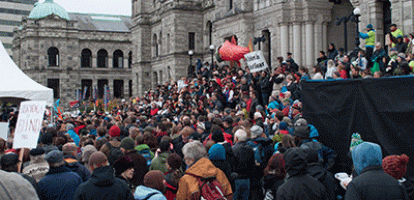 Canada’s public utility regulators, in sectors ranging from energy to telecommunications, are facing a crisis of legitimacy because they promise more than they can deliver and do not deliver what they should, according to a new report from the C.D. Howe Institute. In Defining the Public Interest in Regulatory Decisions: The Case for Economic Efficiency, […]
Ben Dachis – Clean Fuel Standard Driving in the Wrong Direction
 From: Benjamin Dachis To: The Hon. Catherine McKenna, Minister of Environment and Climate Change Canada Date: April 25, 2017 Re: Clean Fuel Standard Driving in the Wrong Direction Transportation is a major contributor to Canada’s greenhouse gas (GHG) emissions, accounting for 24 percent of total emissions. One policy tool Ottawa is driving forward with to […]
Surge Capacity: Selling City-owned Electricity Distributors to Meet Broader Municipal Infrastructure Needs
 Cities across Canada should sell their electricity distribution companies and invest the proceeds in critical municipal infrastructure, according to a new C.D. Howe Institute report. In “Surge Capacity: Selling City-owned Electricity Distributors to Meet Broader Municipal Infrastructure Needs,” author Steven Robins demonstrates why there is no compelling public policy rationale for municipalities to hold these […]
Ryan Kellogg – Should Canada and the US Adopt a Market-Based Approach to Fuel Economy?
 From: Ryan Kellogg To: The Hon. Marc Garneau, Minister of Transport CC: The Hon. Catherine McKenna, Minister of Environment and Climate Change Date: April 6, 2017 Re: Should Canada and the US Adopt a Market-Based Approach to Fuel Economy? Volatile gasoline prices have caused regulators and carmakers alike to question the cost and effectiveness of […]
How Ontario Can End the Cycle of Meddling in Electricity Markets: Globe and Mail Op-Ed
Every 10 years or so, the government of Ontario finds it necessary to freeze or cut electricity prices because the costs of an ambitious energy policy prove to be politically unacceptable. This leaves every generation of electricity customers paying for the cost of a failed experiment from a previous generation. We should learn from this experience and implement a governance model for the sector that reviews and mitigates costs before a policy is adopted, not after.
In 1993, the government froze prices because the costs of Ontario Hydro’s massive nuclear expansion were leading to double-digit rate increases. In 2002, the government froze prices because the electricity market opening resulted in higher and more volatile prices. In…
George Vegh – Ending the Cycle of Electricity Price Interventions in Ontario
 From: George Vegh To: Ontario Electricity Consumers Date: March 15, 2017 Re: Ending the Cycle of Electricity Price Interventions in Ontario Every decade the government of Ontario freezes or cuts electricity prices because the costs of an ambitious energy policy prove to be politically unacceptable. This leaves future electricity customers paying for the cost of […]
Ben Dachis on BNN: Why Albertans’ energy bills don’t benefit from daylight savings time
Ben Dachis, Associate Director of Research at the Institute, joins BNN to discuss a report that finds there is a strong case behind abolishing daylight savings time in Alberta while those in Ontario see energy savings.
Click here to read part 1 and part 2 of the Intelligence Memo by Blake Shaffer and Nic Rivers.
Rivers and Shaffer – Does Daylight Saving Time Reduce Energy Consumption? (Part 2)
 From: Nic Rivers and Blake Shaffer To: Canadians with one less hour of sleep Date: March 8, 2017 Re: Does Daylight Saving Time Reduce Energy Consumption? (Part 2) In Part 1 of this memo we showed the findings that in some regions, daylight saving time (DST) decreases electricity demand, while in others DST either increases or leaves overall demand […]
Rivers & Shaffer – Does Daylight Saving Time Reduce Energy Consumption? (Part 1)
 From: Nic Rivers and Blake Shaffer To: Canadians with one less hour of sleep Date: March 7, 2017 Re: Does Daylight Saving Time Reduce Energy Consumption? (Part 1) Every spring and fall, clocks across much of North America, Europe and a few other parts of the world are shifted forward or back one hour. This […]
Paying for Pipelines – How Consumers Can End Up Footing Some of the Bill: CBC News
“My Region First!”
It’s a rallying cry we’re hearing more these days, as regionalism becomes more a part of public policy.
The B.C. government recently approved the Trans Mountain pipeline that will haul Alberta oil to port. And it did so after squeezing up to a cool billion dollars out of Kinder Morgan — money which will go into an environmental protection fund.
Sounds good. Alberta gets an economic boost, B.C. gets a share of the spoils and some environmental help, and Kinder Morgan foots the bill. Or does it?
Things aren’t always how they appear. More often than not, the person who has to cut the cheque is not the one who ends up paying.
So who does? It’s a complex question.
But in…
Making Sense Of Alberta’s New Energy Efficiency Program: Maclean’s
Following a report by Alberta’s Energy Efficiency Advisory Panel, the government announced a large program last week aimed at improving the energy efficiency of homes, businesses and non-profits. It will fund free installation of energy efficiency products throughout the province, and provide rebates on efficient appliances, lighting, and so on. With a budget of $645 million over the next five years, funded by carbon tax revenue, it’s no small endeavour and is worth a careful look.
First, let’s take a step back and ask: What is the purpose of energy efficiency programs?
Simply put, they can potentially solve two market failures: (1) environmental externalities; and (2) behavioural biases. The success of the program should…