


Myers, Papineau – Current Energy Modelling for Buildings is a Roadblock to Net Zero
 From: Erica Myers and Maya Papineau To: Green Transition Watchers Date: January 18, 2023 Re: Current Energy Modelling for Buildings is a Roadblock to Net Zero Decarbonization of industry and transportation are often top of mind when considering Canada’s ambitious 2050 net zero emission goals. This often obscures a crucial sector that will determine whether our country can meet […]
 G. Kent Fellows – Oil Sands are Richer Than You Think
 From: G. Kent Fellows To: Oilpatch Observers Date: January 17, 2023 Re: Oil Sands are Richer Than You Think Canadian and global climate change ambitions are generally associated with a reduction of fossil-fuel reliance as a mechanism to reduce carbon emissions. Many major energy authorities including The International Energy Agency and BP Energy (via their Global energy outlook) now […]
 We won’t make Ottawa’s 2030 emissions targets and it won’t even be close – Financial Post Op-Ed
Last March, Ottawa announced its target for greenhouse gas (GHG) emissions in 2030. It wants to reduce them from 740 million tonnes (MT) of CO2-equivalent in 2019 to 442 MT in 2030, a reduction of 298 MT, or 40 per cent. Unfortunately, setting targets is a lot easier than hitting them. Ottawa’s Emissions Reduction Plan is long on policies and programs but short on what will actually need to happen in order to reach these targets.
My own analysis, available on the C. D. Howe Institute website, suggests the 2030 reduction will be, at best, only 158 MT — only a little over halfway to Ottawa’s target.
I get this result with fact-based, bottom-up calculations. Consider …
L’argent pour la biodiversité – La Presse Op-Ed
La nature a beau être aimée de tous, il sera difficile de trouver tout l’argent nécessaire pour stopper, puis renverser sa perte de biodiversité, ai-je constaté en allant fouiner à la COP15. Un beau défi pour la finance durable.
L’expression « 30 x 30 » qui a retenu l’attention fait allusion aux 30 % de la terre et aux 30 % de l’eau qui doivent être protégés d’ici 2030. Mais elle désigne aussi les 30 milliards de dollars américains* d’aide annuelle aux pays en développement promise à partir de 2030.
Ce deuxième 30 x 30 est un compromis. Les pays riches étaient réticents, eux qui n’arrivent pas à livrer les 100 milliards par an promis au Sud pour lutter contre le…
When the wind isn’t blowing, the sun isn’t shining: The case for nuclear energy – Globe and Mail Op-Ed
A great part of Canada’s goal of eliminating emissions from electricity generation by 2050 relies on renewable energy, and the relevant technology is simply not there yet. Wind and solar generate valuable zero-greenhouse-gas power – but only provided there exist low-cost means to “store” surplus electricity not needed by the utility at time of generation but needed later. Without adequate storage, power utilities heavily dependent on wind/solar risk instability.
The problem has not arisen in Canada, but has elsewhere. Advocates of nuclear, including many Canadian power utilities, make the obvious argument in finding a solution: Nuclear power emits no GHGs and is accessible, whether or not the sun is shining and/or the wind is…
Last Barrel Standing? Confronting the Myth of “High-Cost” Canadian Oil Sands Production
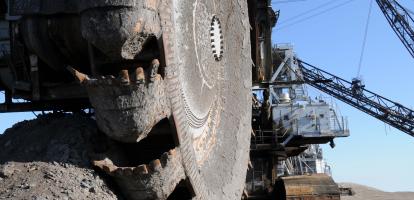 Canadian and global climate change ambitions are generally associated with a goal of reducing reliance on fossil fuels as a mechanism to reduce carbon emissions. Within this context, the Canadian oil sands have been characterized as “too expensive” to maintain production if global crude oil demand falls, a view that appears regularly in the media […]
 Hodgson, St–Arnaud – The Oilpatch is Gushing Money. Where’s the Boom?
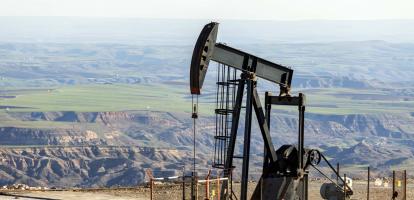 From: Glen Hodgson and Charles St-Arnaud To: Alberta economy watchers Date: December 19, 2022 Re: The Oilpatch is Gushing Money. Where’s the Boom? Alberta has earned a reputation over many decades for being a boom-bust economy. Strong oil demand and high prices create boom times for jobs, incomes, investment and government revenues, while slowdowns and recessions too often follow […]
 Brian Livingston – Counting Carbon IV: A Reality Check on Our Emission Reduction Plan
 To: The Hon. Steven Guilbeault, Minister of Environment and Climate Change From: Brian Livingston Date: December 16, 2022 Re: Counting Carbon IV: A Reality Check on Our Emission Reduction Plan The federal government’s ambitious Emissions Reduction Plan (ERP) set out targets for seven economic sectors as it aims to cut 2030 emissions by 42 percent from 2019 levels. […]
 Brian Livingston – Counting Carbon III: A Reality Check on Our Emission Reduction Plan
 To: The Hon. Steven Guilbeault, Minister of Environment and Climate Change From: Brian Livingston Date: December 15, 2022 Re: Counting Carbon III: A Reality Check on Our Emission Reduction Plan This Intelligence Memo (IM) is the third in a series (see earlier IMs on transport and, oil and gas) dealing with the seven sectors of the Canadian economy […]
 Brian Livingston – Counting Carbon II: A Reality Check on Our Emission Reduction Plan
 To: The Hon. Steven Guilbeault, Minister of Environment and Climate Change From: Brian Livingston Date: December 14, 2022 Re: Counting Carbon II: A Reality Check on Our Emission Reduction Plan The federal government’s ambitious Emissions Reduction Plan (ERP) sets out targets for seven economic sectors as it aims to cut 2030 emissions by 42 percent from 2019 levels. […]
 Brian Livingston – Counting Carbon: A Reality Check on Our Emission Reduction Plan
 To: The Hon. Steven Guilbeault, Minister of Environment and Climate Change From: Brian Livingston Date: December 13, 2022 Re: Counting Carbon: A Reality Check on Our Emission Reduction Plan The federal government’s ambitious Emissions Reduction Plan (ERP) last March set out targets for seven sectors that make up the total Canadian greenhouse gas emissions. It aims to cut […]
 Les jumeaux planétaires – La Presse Op-Ed
Le climat et sa sœur, la biodiversité, sont des jumeaux qu’on n’aurait pas dû séparer à la naissance.
À la COP15 de Montréal, on se penche sur le cas de la petite, aussi grave mais autrement plus compliqué que celui de son frère, traité le mois dernier à la COP27, à Charm el-Cheikh. Les savants docteurs ont intérêt à travailler ensemble, car ces enjeux sont intimement liés.
Le réchauffement climatique réduit la biodiversité et vice versa. Un exemple : le réchauffement étend les déserts et le recul de la végétation réduit le captage naturel du carbone, qui s’échappe dans l’atmosphère et empire le réchauffement.
Heureusement, ce qui est bon pour l’un l’est aussi pour l’autre. On estime que des solutions axées sur…